
Release 2026.8.27 introduces multiple fixes and new capabilities. We highlight (1) a new AFIR + MACE reaction path discovery capability; (2) a new Jupyter notebook demonstrating defect formation energy calculations; and (3) a step-by-step tutorial reproducing band structure calculations for twisted MoS2 bilayers.

Release 2026.8.27 introduces multiple fixes and new capabilities. We highlight (1) a new AFIR + MACE reaction path discovery capability; (2) a new Jupyter notebook demonstrating defect formation energy calculations; and (3) a step-by-step tutorial reproducing band structure calculations for twisted MoS2 bilayers.
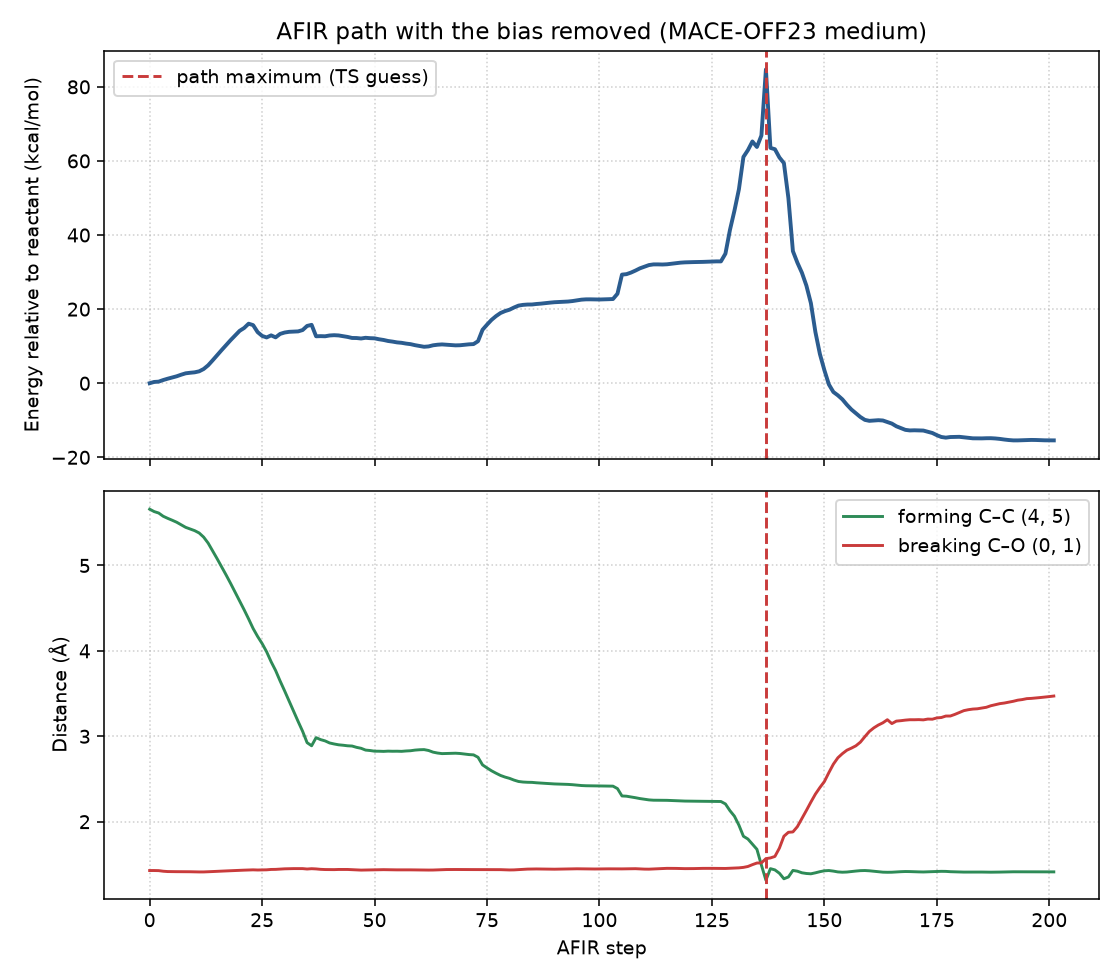
InMemoryEntity generic to eliminate per-subclass _json / toJSON declarationsdist in JS DevelopmentgetIcon() for MaterialA new notebook discovers reaction paths by driving the reaction with the artificial force induced reaction (AFIR) method on top of the MACE machine-learning force field. With the bias removed, the maximum along the path gives the transition-state guess, and the forming and breaking bond distances show the mechanism directly:
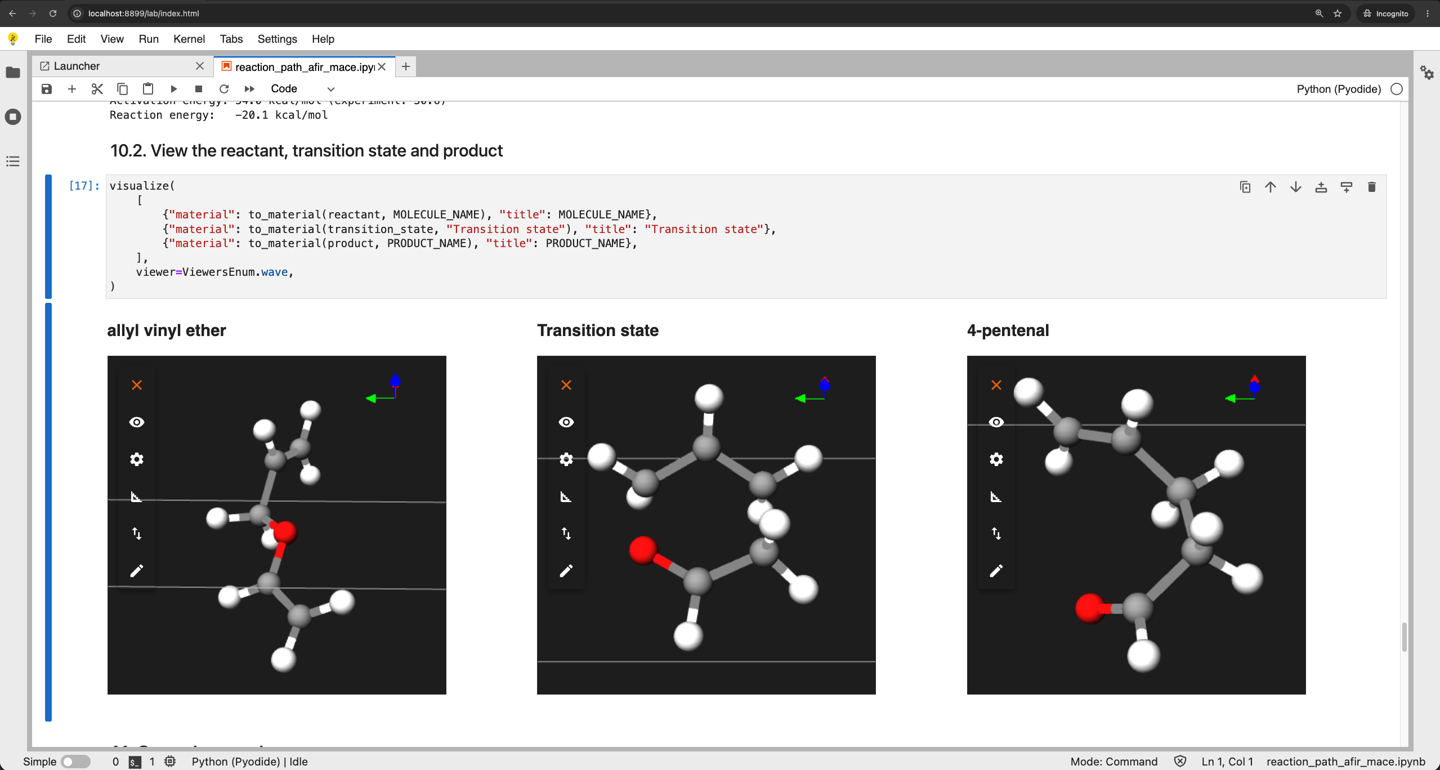
The reactant, transition state and product are then inspected side by side in the notebook - here for a Claisen rearrangement of allyl vinyl ether into 4-pentenal:
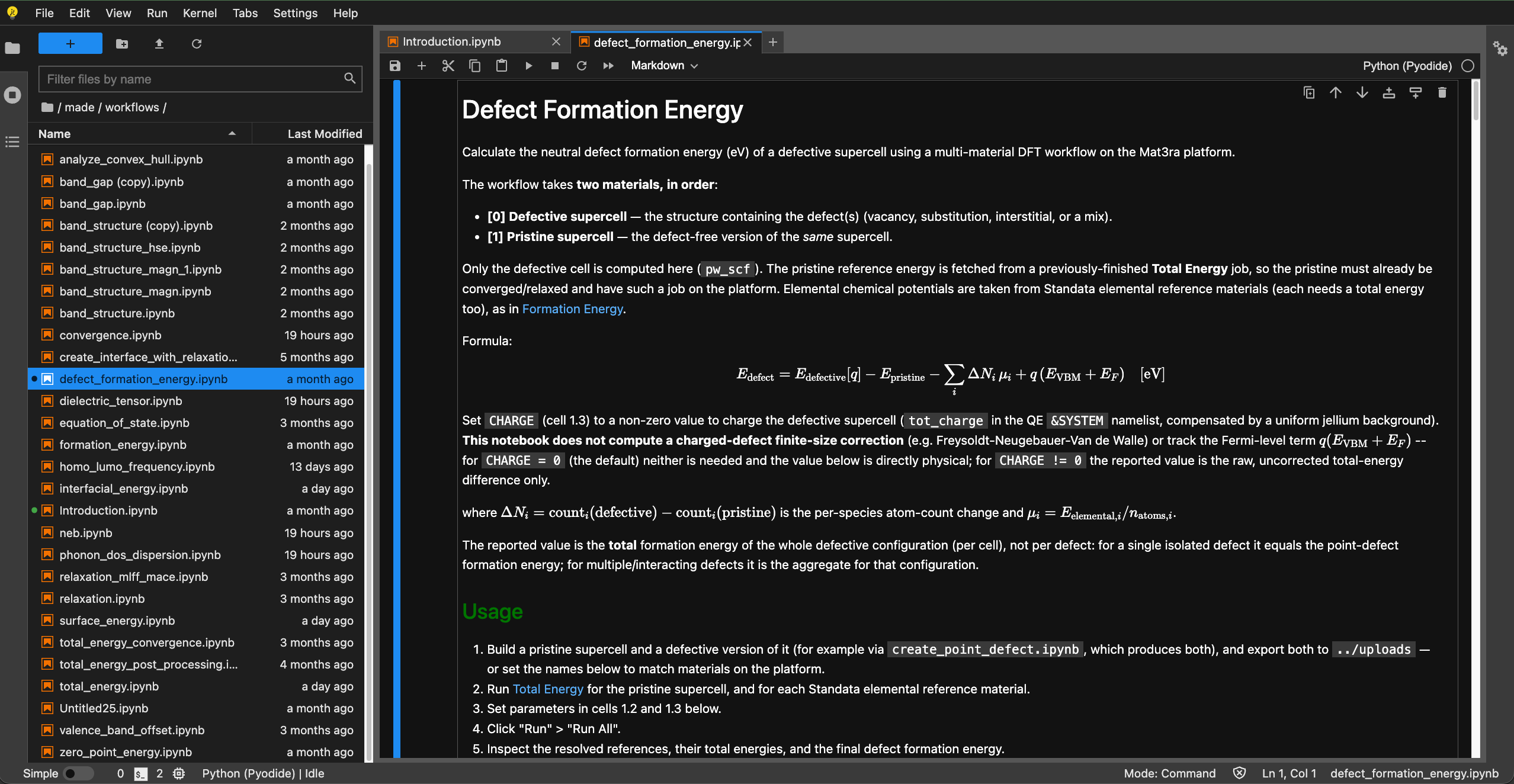
A new notebook and workflow compute the neutral defect formation energy of a defective supercell through a multi-material DFT workflow, with elemental chemical potentials taken from Standata reference materials:
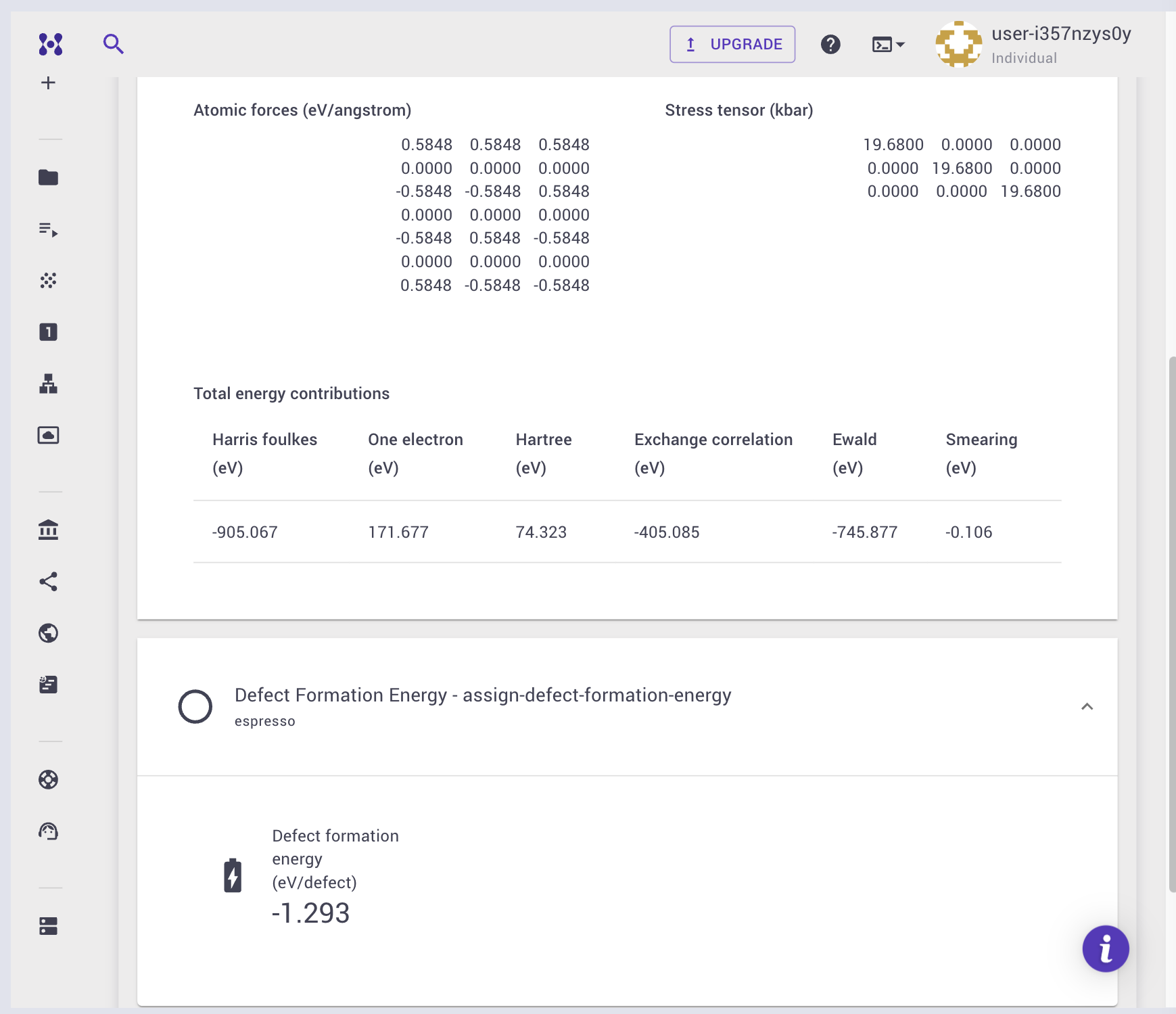
The workflow reports the formation energy directly on the platform, alongside the usual total-energy breakdown, atomic forces and stress tensor:
A step-by-step tutorial reproduces the interlayer-coupling result for twisted molybdenum disulfide bilayers, following the stacking configurations and band gaps reported in the literature:
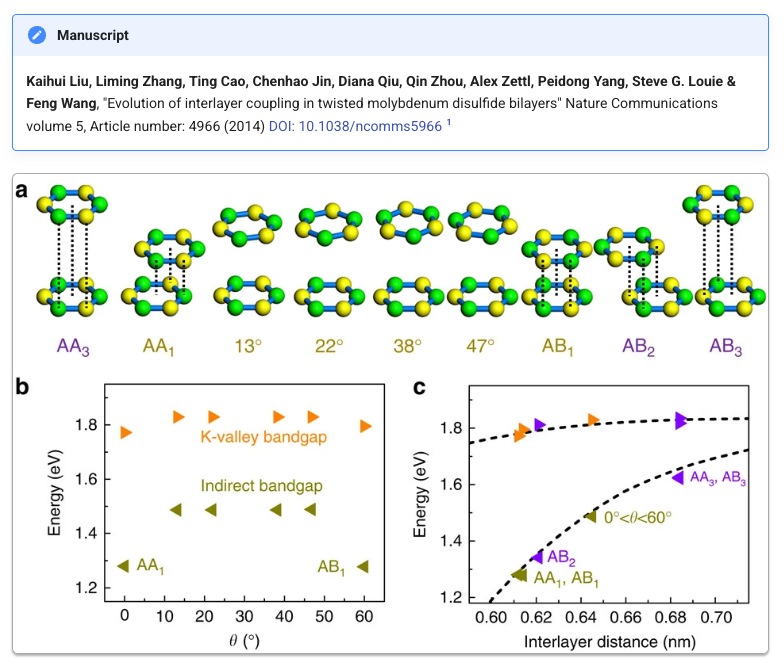
Figure from Kaihui Liu, Liming Zhang, Ting Cao, Chenhao Jin, Diana Qiu, Qin Zhou, Alex Zettl, Peidong Yang, Steve G. Louie and Feng Wang, "Evolution of interlayer coupling in twisted molybdenum disulfide bilayers", Nature Communications 5, 4966 (2014). DOI: 10.1038/ncomms5966
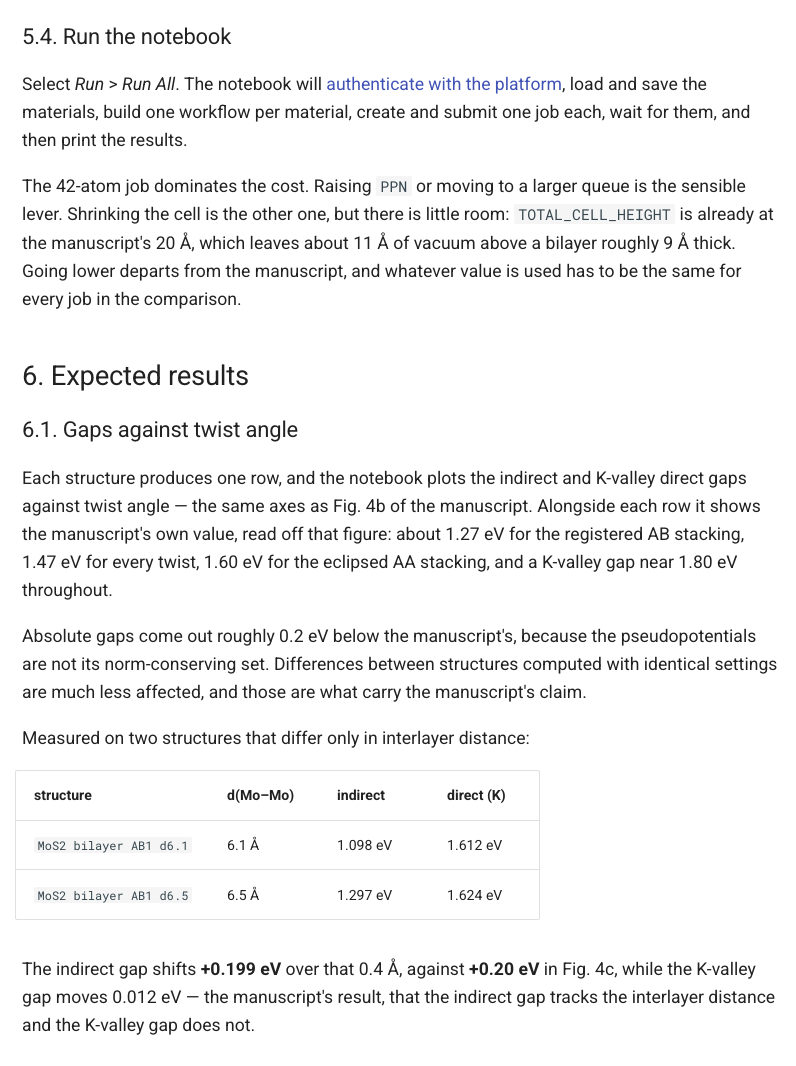
Running the notebook across structures that differ only in interlayer distance reproduces the published trend: the indirect gap shifts by 0.199 eV over 0.4 A, against 0.20 eV in the manuscript, while the K-valley gap moves only 0.012 eV. The indirect gap tracks the interlayer distance and the K-valley gap does not:
Try the new functionality online at https://platform.mat3ra.com/

Exabyte Inc.
1212 Broadway Plaza, Ste #2100 Walnut Creek, CA 94596
+1 (510) 473 7770
info@mat3ra.com
Mat3ra Japan K.K.
Otemachi Building 6F Inspired Lab,
1-6-1, Otemachi, Chiyoda-ku, Tokyo 100-0004 Japan


