
Lorem ipsum dolor sit amet, consectetur adipiscing elit. Suspendisse varius enim in eros elementum tristique. Duis cursus, mi quis viverra ornare, eros dolor interdum nulla, ut commodo diam libero vitae erat. Aenean faucibus nibh et justo cursus id rutrum lorem imperdiet. Nunc ut sem vitae risus tristique posuere.


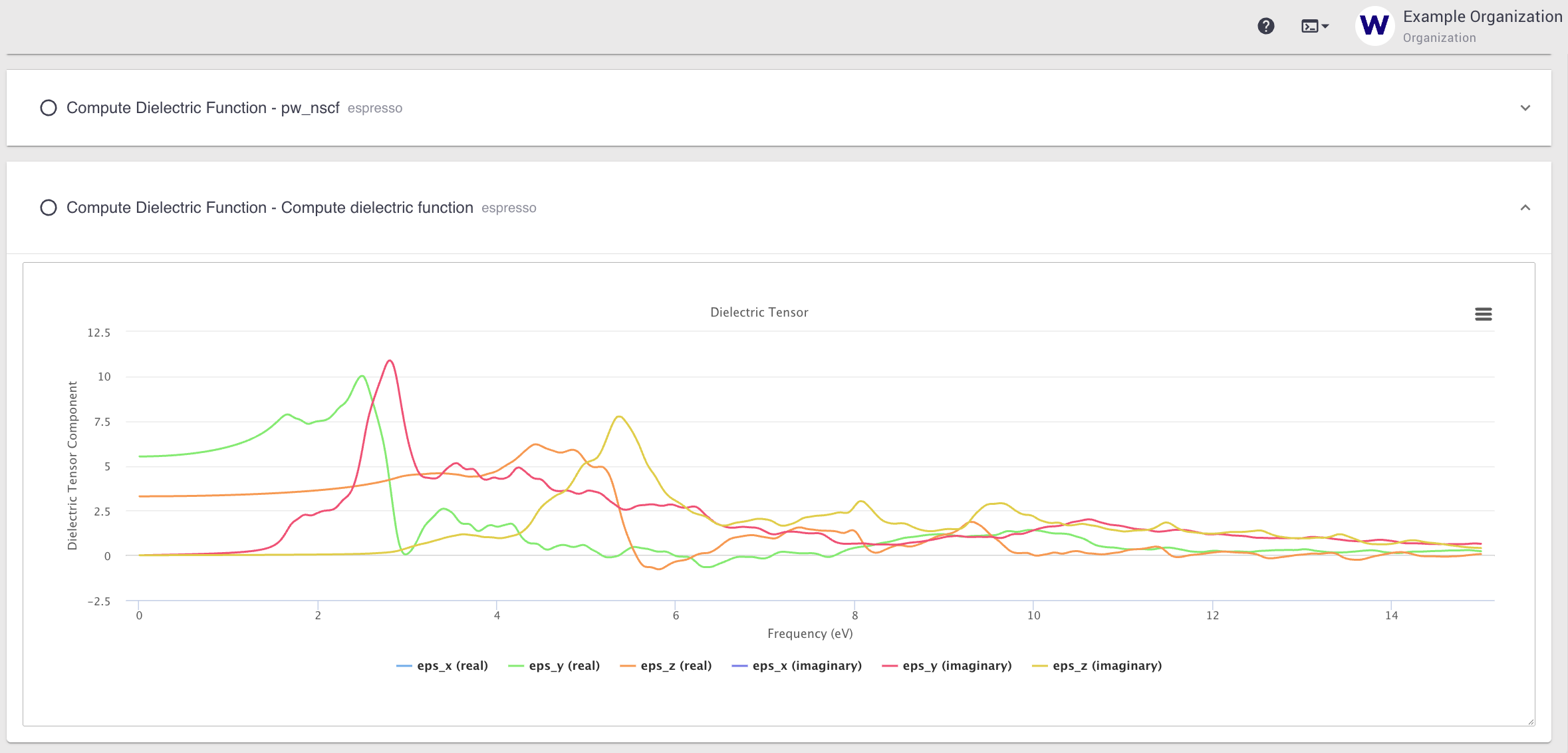
This webinar presents practical workflows for computing the dielectric tensor and optical spectra using Quantum ESPRESSO from JupyterLab notebooks on the Mat3ra platform. The session covers setting up and running dielectric and optical calculations and interpreting the dielectric response and optical absorption, with examples including bulk silicon, monolayer MoS₂, and rutile TiO₂.
Season 2, Episode IX: Electronics: Dielectric Tensor + Optical SpectraDate: December 23, 2026, 07.30 PST / 10.30 EST / 16.30 Europe / 21.00 India / 23.30 Singapore / 00.30 Japan (Dec 24)
Host: Timur Bazhirov
Presenter: Vsevolod (Seth) Biryukov
Language: English
This webinar demonstrates how to compute electronic and optical properties—dielectric tensor and optical spectra—using Quantum ESPRESSO from JupyterLab notebooks on the Mat3ra platform. The session will focus on practical workflows for obtaining and interpreting the dielectric response and optical properties of 2D and bulk materials from atomistic simulations.
1. Introduction
2. Methodology
3. Results:
4. Q&A

1212 ブロードウェイプラザ、セット #2100
1212 Broadway Plaza, Ste #2100 Walnut Creek, CA 94596
+1 (510) 473 7770
info@mat3ra.com
Mat3ra Japan K.K.
Otemachi Building 6F Inspired Lab,
1-6-1, Otemachi, Chiyoda-ku, Tokyo 100-0004 Japan


